
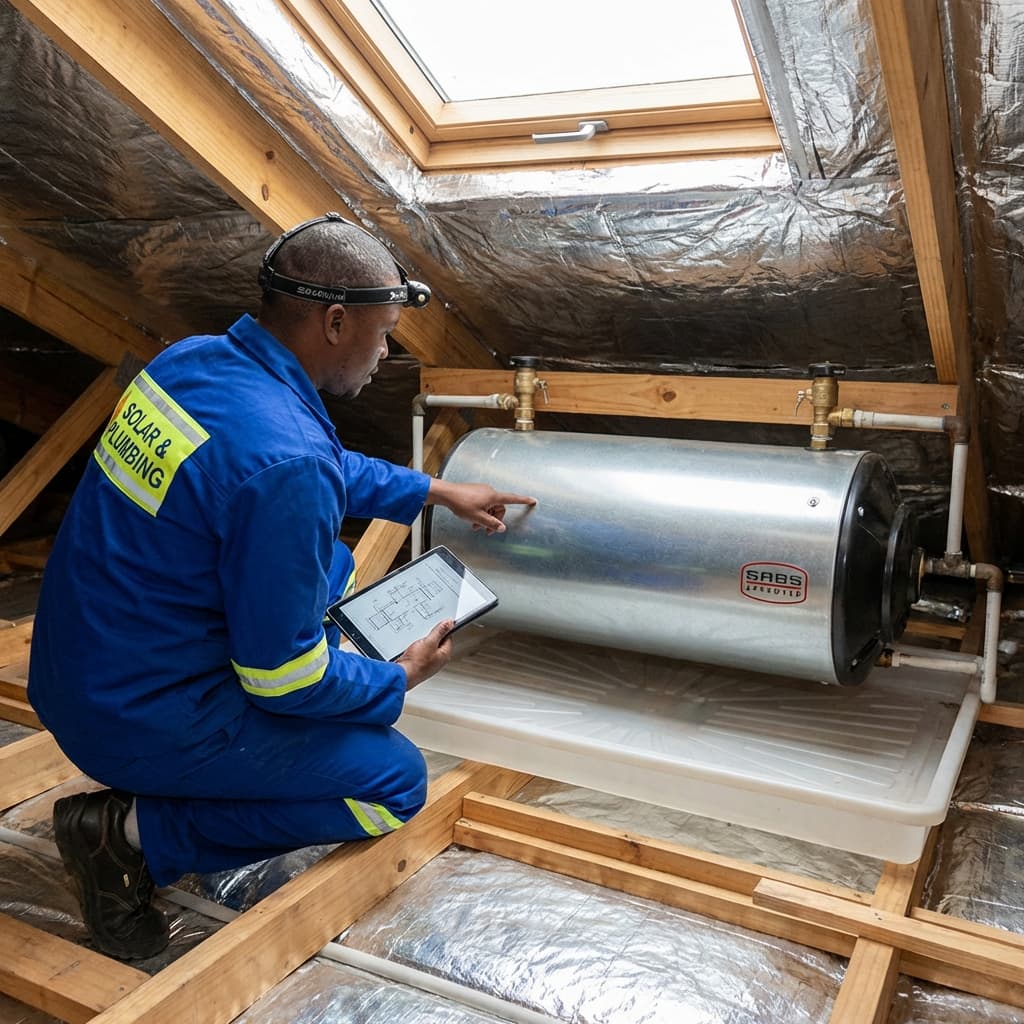
A geyser is easy to overlook while hot water arrives as expected. Attention often comes only when a leak appears, the water becomes unreliable or a damaged ceiling makes the problem impossible to ignore. A more useful approach is to understand the equipment you have, notice changes in its behaviour and arrange maintenance according to the manufacturer's requirements and the installation's condition.
Maintenance can help identify wear, faults and installation problems, but it cannot prevent every failure or promise a particular service life. This guide is for homeowners and property managers in Johannesburg and Gauteng who want to ask better questions, organise servicing and plan repairs sensibly. It is not a set of instructions for opening an electrical appliance, adjusting safety devices or working on a pressurised hot-water system.
Start with the geyser's identity and history
The make, model and installation details are the starting point for useful advice. Where information is safely accessible, keep the equipment description, installation invoice and warranty documents together. If the label is inside an inaccessible roof space, do not climb in to find it. A suitably equipped professional can record the necessary details during an inspection.
History helps interpret current symptoms. Note previous leaks, replaced components, recurring heating faults and any changes to the plumbing or electricity supply. A system that has repeatedly lost hot water may need a different investigation from one with a single leaking connection. Accurate records help the plumber distinguish a new event from an unresolved pattern.
Also describe how the property uses hot water. An increase in occupancy or a change in daily routines can affect whether the existing arrangement meets demand. Reduced availability does not automatically mean the tank has failed or that a larger replacement is the correct response. The assessment should consider the equipment, controls, installation and actual requirements together.
Recognise changes without diagnosing them yourself
Visible leaks, staining near the installation and changes in hot-water delivery are useful observations to report. Be specific about where moisture appears, when the problem occurs and whether it is worsening. Inconsistent temperature, unusual discharge and persistent new noises can also warrant attention, but none of those symptoms establishes a particular failed component by itself.
There is an important difference between observing and testing. Do not remove electrical covers, operate unfamiliar valves or touch fittings to see whether they are hot. Some parts of a hot-water installation can present burn, electrical or pressure hazards. A description from a safe position is enough to begin the conversation; a professional should decide what inspection or testing is appropriate.
Discharge deserves context. Tell the plumber which visible pipe is releasing water and whether the pattern has changed, without blocking, capping or redirecting it. A safety-related outlet must not be treated as a nuisance drain to be stopped. If you cannot identify the pipe safely, describe the location and let the assessor establish its purpose.
Treat leakage near ceilings or electricity as a safety issue
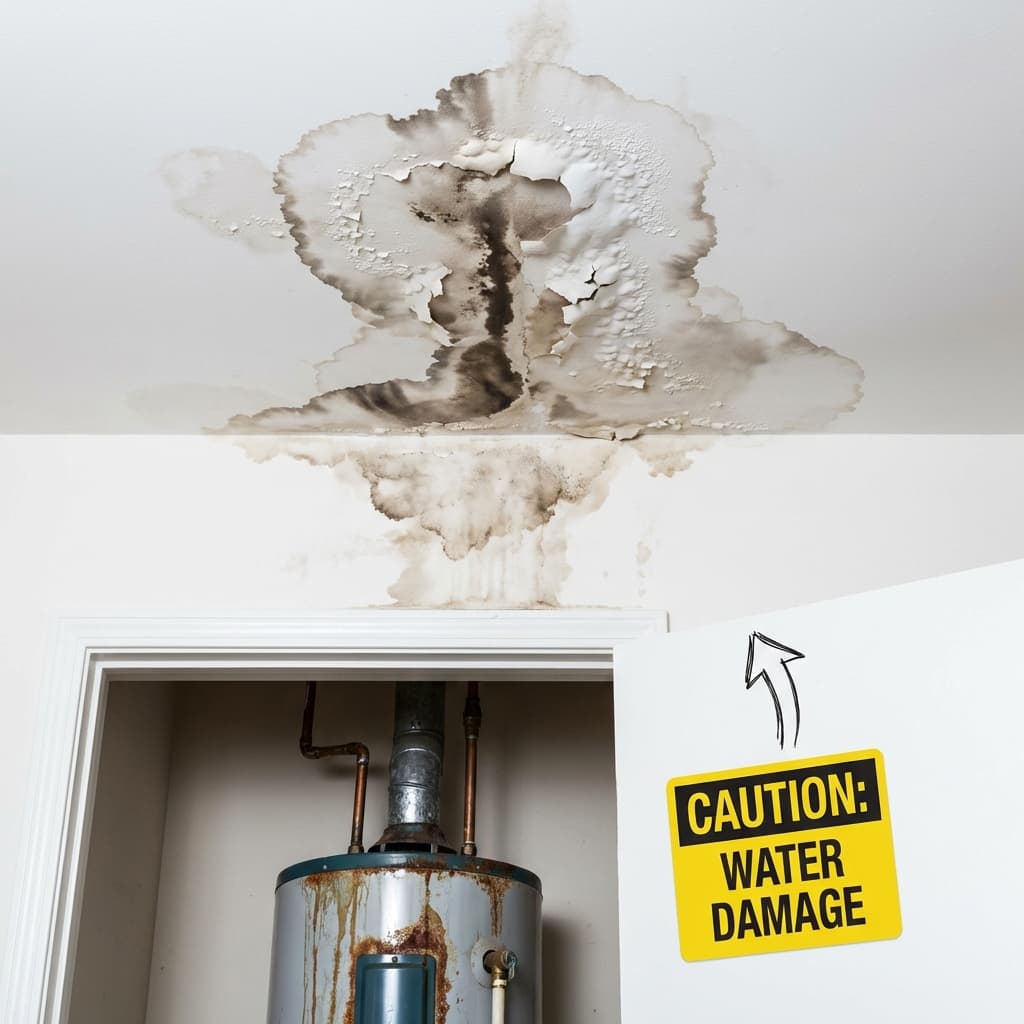
Water damage can extend beyond the geyser itself. If a ceiling is newly sagging, bulging or shedding material, keep people away and arrange urgent assistance. Do not stand underneath to collect belongings or place a bucket, and do not enter the roof space to investigate. The condition of the ceiling and its supports cannot be established from the size of the visible stain.
Water near lights, wiring or electrical distribution equipment needs particular caution. Do not touch wet switches or fittings, and do not approach a board through water or an unsafe area. An appropriately qualified electrician may be needed alongside the plumber. A water source being stopped does not automatically mean affected electrical equipment is safe to use again.
Where there is immediate danger, fire, injury or suspected collapse, contact the appropriate emergency service rather than waiting for an online enquiry to be answered. Once the immediate risk is addressed, the permanent repair can be planned. Our emergency building repair guide explains the distinction between making safe and reinstating the property.
Understand what professional servicing may involve
The servicing approach should follow the requirements of the particular equipment and respond to the reported symptoms. Depending on the system, the inspection may include accessible pipework, fittings, valves, drainage arrangements, signs of corrosion and relevant installation details. Electrical or heating faults should be assessed by the appropriate qualified trade rather than treated as ordinary plumbing adjustments.
Some storage-water-heater designs use a sacrificial anode, but the presence, inspection method and maintenance requirements depend on the model. Do not assume that every geyser has the same components or that a single checklist fits every installation. Ask the provider to identify the applicable manufacturer guidance and explain which items are being inspected, serviced or replaced.
A useful service report separates observations from recommended work. It should explain what was checked, any limitations and the reason for each proposed repair. If parts are being replaced, ask what the parts are and why replacement is appropriate. This creates a clearer record than an invoice that simply says "geyser service" with no indication of the work performed.
Set the maintenance schedule from the actual requirements
There is no universal service interval that should be applied to every geyser without checking its documentation. Manufacturer instructions, warranty terms, the installation and its history can influence the schedule. Water conditions may also be relevant, but should not be assumed from the suburb name or used as a blanket explanation for every failure.
Ask the servicing provider to explain the recommended interval and what should trigger an earlier visit. A new leak or heating fault should not wait until the next calendar appointment merely because the equipment was recently serviced. Conversely, routine replacement of every component at an arbitrary age is not automatically justified without reference to condition and the applicable instructions.
Put agreed follow-up dates in a property-maintenance record and keep reports from each visit. This is particularly useful for rental properties where occupants may change and the owner is not present to notice symptoms. Clear responsibility for reporting faults is as important as the date of the next planned service, because a schedule cannot address an issue nobody has communicated.
Compare repair and replacement on more than price
A targeted repair may be appropriate where the remaining equipment and installation are suitable. Replacement may be more sensible in other circumstances, particularly where the assessment identifies broader deterioration or the equipment no longer meets the property's requirements. The decision should follow the findings, not a claim that all units must fail at a particular age.
Ask for a comparison that includes the complete scope. Access, removal, disposal, associated pipework, electrical work and making good can change the final cost. A replacement quotation may also identify installation corrections that a narrow component-repair price does not include. Comparing only the headline amount can conceal these differences.
For an illustrative example, imagine a homeowner receives one quote to replace a faulty component and another to replace the whole unit. The useful questions are why each option is proposed, what condition the rest of the system is in and what remains excluded. Neither option should be accepted solely because it is cheaper, newer or described as a permanent solution.
Keep safety components and installation details in scope
A geyser does not operate independently of the connected valves, pipes, electrical supply and drainage arrangements. The assessment should consider the installation as a system. If a problem is linked to a surrounding component or incorrect arrangement, replacing the tank alone may not address the cause of the complaint.
Ask the contractor to explain any proposed correction in understandable terms and identify the applicable manufacturer or installation requirements. Do not authorise removal or bypassing of a safety device simply because it stops a discharge or appears to restore normal use. Work that changes the installation should be performed and checked by appropriately qualified providers.
Maintenance access matters too. Components that need future attention should not be boxed in without suitable arrangements, and alterations to the building should preserve appropriate access. If you are renovating a bathroom or changing service routes, include the hot-water system in the design discussion. Our plumbing layout guide explains why accessibility belongs in the initial scope.
Plan the building repairs as a separate stage
Stopping a leak does not finish the work if ceilings, walls, cupboards or flooring have been affected. These materials need assessment based on their condition and exposure. Some may be suitable for drying and preparation; others may require removal or replacement. A visually dry surface does not establish that every concealed layer is sound or ready to be covered.
Coordinate plumbing repairs with the relevant building trades so finishes are not reinstated prematurely. The scope should distinguish source repairs, investigation, drying or preparation, replacement material and decoration. If electrical components were affected, the relevant checks should be completed before the area or equipment is returned to use.
Appearance also needs an agreed outcome. A patch in a ceiling can remain visible because of texture or paint sheen, even when the repaired area is sound. Ask whether local making good or repainting the full surface is included. Construction Joburg's interior painting services can be discussed once the moisture problem and substrate condition have been addressed.
Understand warranties and insurance as separate arrangements
A manufacturer's warranty, an installer's workmanship agreement and a household insurance policy are different things. Their terms, exclusions and reporting processes can differ. Keeping maintenance records is sensible, but those records do not guarantee that a failure is covered by any particular arrangement or that an insurer will reimburse the proposed work.
Contact the relevant provider about the process before authorising non-emergency work where approval may be required. Ask what evidence is needed, who should assess the damage and whether specific authorisation applies to replacement or reinstatement. Necessary safety measures should not be delayed while you wait to prepare a perfect photographic record.
Retain invoices, equipment details, service reports and safely taken photographs. A contractor can explain the observed damage and quote for repairs, while the insurer makes its decision under the policy. Our insurance-related repair service can be discussed as a building-work scope; it should not be interpreted as a promise of claim acceptance or a particular settlement.
Make communication easier in rented or managed properties
Where the owner is not the occupant, agree how symptoms should be reported and which contact is responsible for arranging assistance. A short description of what changed, when it began and whether the area is unsafe can be more useful than several disconnected messages. Occupants should not be asked to enter roof spaces or dismantle equipment to help identify a fault.
Keep access and authorisation arrangements clear. The contractor may need entry to more than one area, and electrical or building repairs may require separate attendance. Confirm who can approve work and how additional findings will be communicated. This avoids a situation where a provider arrives but cannot inspect the affected area or obtain a decision on necessary work.
After the repair, provide occupants with relevant information about normal use, any restrictions and whom to contact if symptoms return. Close the maintenance record only when the agreed work and necessary checks are complete. If a similar issue reappears, share the earlier report so the investigation starts with the history instead of treating the event as unrelated.
In a complex or a building with several occupants, explain whether the hot-water installation serves one unit or a shared arrangement. Confirm the location of the equipment and the access needed to reach it without assuming that the person reporting the fault controls every affected space. A repair may require coordination with building management, another occupant or a provider responsible for shared equipment. Agree notification and access arrangements before attendance, and ask the contractor to confirm the affected service boundaries. This helps avoid an unexpected interruption elsewhere or a visit that cannot proceed because essential access has not been arranged.
Prepare a useful request for a plumbing assessment
You do not need technical language to request help. Provide the suburb, property type, symptoms, timing and any safely accessible model information. Mention whether there is active leakage, ceiling deformation or water near electrical fittings, and whether the area has already been made safe. This helps establish what type of attendance is needed and which other trades may be involved.
Include previous repair history and available documentation rather than expecting an exact diagnosis or price from one photograph. Some problems can be scoped quickly; others need investigation before a firm quotation is possible. Ask the provider to explain that distinction, any assessment charge and the process for approving subsequent work.
For a Johannesburg or Gauteng property, see Construction Joburg's plumbing services or send an enquiry. Availability and the next step should be confirmed directly. A considered maintenance approach means noticing changes, keeping reliable records and arranging the right professional work, without treating servicing as a guarantee that an appliance can never fail.