
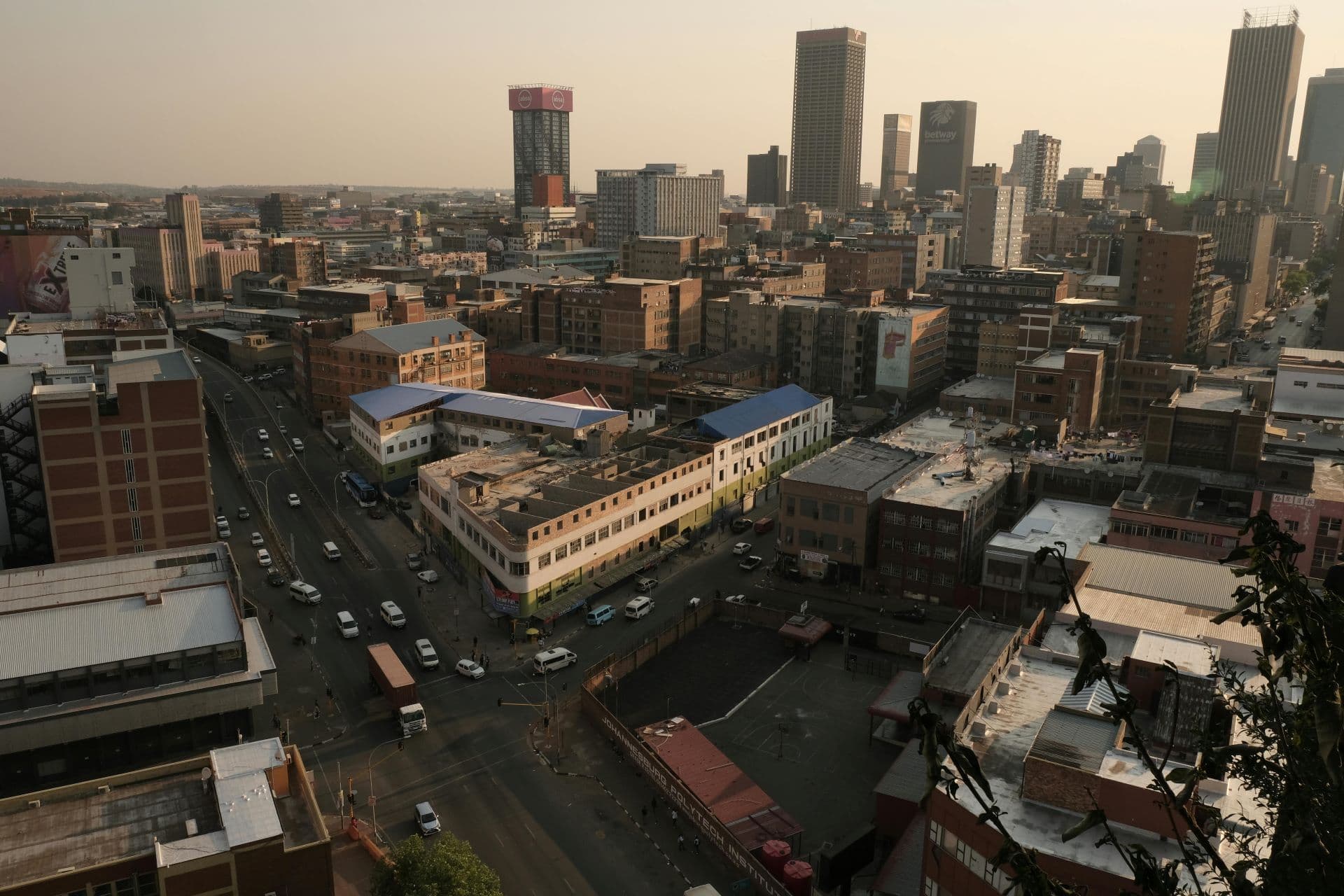
A wet boundary, sinking driveway or recurring damp patch may involve a fault on private property, a public network or more than one source. Nearby ageing infrastructure is relevant context, but its age does not prove that it caused the damage. Johannesburg owners need a practical way to protect the property, collect useful evidence and investigate the possible sources without making premature assumptions about responsibility.
Public fault reporting and private-building assessment are connected activities, but neither replaces the other. A utility may repair a pipe without assessing a nearby building, while a contractor may restore a wall without establishing where the water originated. Keeping those scopes distinct is essential to a defensible repair plan.
Protect People Before Investigating the Source
Keep clear of floodwater, unstable paving, collapsing ground and damaged electrical equipment. Do not enter a manhole, open an inspection chamber or approach an excavation to identify the source. Water can conceal hazards and may be contaminated even when its appearance seems unremarkable. Where a building component appears unstable or there is an immediate danger to occupants, restrict access and seek appropriate urgent professional or emergency assistance. Administrative reporting and photographs should follow once they can be obtained safely.
A visible depression beside a road or boundary should not be tested by walking or driving over it. Similarly, an owner should not try to expose a buried pipe to prove that a leak exists. Underground services and unsupported ground can introduce risks that are not evident at the surface. Describe the location and visible condition to the responsible provider and any building professional involved. Safe investigation needs suitable access, authority and methods, not simply a willingness to find the fault quickly.
Inside the property, avoid rooms or areas affected by suspected ceiling instability, unsafe wiring or other immediate hazards. Moving possessions is secondary to personal safety and should only occur where access is safe. Ask the attending professional to explain which areas can be used and which require restrictions while assessment continues. Record temporary precautions and who is responsible for reviewing them. A fault reference number is not a safety assessment, and a report being logged does not make a hazardous area safe to occupy.
Distinguish the Networks and Their Interfaces
Water supply, wastewater, stormwater, roads and electricity are different systems with different reporting and technical responsibilities. A puddle beside a kerb is not automatically a water-main leak, and water emerging near a chamber does not establish the origin of the flow. Begin by describing the observed symptom and location. Where the network is uncertain, ask the relevant authority or professional how it should be investigated rather than assigning the issue to whichever utility is most familiar.
The boundary between public and private responsibility also needs confirmation. A service may cross private land, a private drain may connect beyond the boundary, and shared developments may have arrangements that are not obvious from the location of a fitting. Do not assume ownership solely because a component sits outside a wall or near a meter. Available plans, connection information and the responsible provider's findings can help establish the interface. A private contractor should not alter public assets without the necessary authorisation.
For shared properties, identify the managing agent, owner or other person who can authorise access and investigation. Neighbouring owners may have useful observations, but their reports should remain separate evidence rather than being combined into a single unsupported conclusion. A shared wet area can have several contributing sources. The practical objective is to get the right people looking at the right parts of the system while maintaining a clear record of what each inspection actually establishes.
Build a Dated Record of Observations
Create a simple chronology beginning with when the symptom was first noticed. Include rainfall conditions, visible flows, supply interruptions, private repairs and nearby works where these are known. Separate firsthand observations from information supplied by other people. A statement such as water was visible beside the gate before rain began is useful because it describes an event. A statement that a municipal pipe destroyed the foundations goes beyond what the owner can establish without supporting technical assessment.
Photographs should include wider views and repeatable reference points, taken from a safe location. Show the relationship between the affected area, building, street and visible drainage features without entering restricted places. Retain original files and note the dates, rather than relying only on edited images circulated in a message group. Where internal damage develops, record its location and changes over time. The purpose is to preserve the sequence of events, not to create an argument through selective photographs.
Keep fault references, inspection reports, attendance dates and correspondence in the same chronology. Record what was said or done, distinguishing a reported repair from a repair whose outcome has been observed. If a provider closes a report while symptoms remain, the dated record can explain why further investigation is being requested. This file can support technical coordination and later advice about claims, but it does not itself establish causation, liability or entitlement to reimbursement.
Compare Rain-Related and Persistent Symptoms
Timing helps frame the investigation. Water that appears only during rainfall may involve roof discharge, surface levels, stormwater inlets or runoff from elsewhere. Water that remains or emerges during dry conditions may call for a different set of checks, including supply pipework, irrigation or other sources. These patterns are clues, not proof. Some buried areas remain wet after rain has stopped, and more than one source may contribute to the same visible patch.
Observe the wider route from a safe position. A road surface, kerb, driveway entrance or blocked collection point can influence where runoff travels. Recent resurfacing or alterations may be relevant if levels have changed, but the timing of works does not automatically prove that they caused damage. Professional measurements may be needed to understand the relationship. Our drainage assessment guide explains how surface falls, collection points and downstream outlets need to be considered together.
Supply interruptions and changes noticed around restoration should also be described without an assumed mechanism. If plumbing or electrical symptoms occur, the appropriate specialist should investigate the private installation and consider the available information about the public service. Do not attribute all faults to pressure changes or power restoration simply because events occurred close together. The useful record includes what stopped working, when it happened and what the specialist found, with uncertainty left visible where the evidence does not support a firm conclusion.
Investigate Private Systems in Parallel
Reporting a suspected public fault does not remove the need to assess the property's own systems. Private plumbing leaks, roof drainage, irrigation, poorly arranged overflows and changes to paving can produce similar symptoms. A competent provider should choose investigations appropriate to the actual layout and problem. The owner should ask what each check is intended to establish and whether further access is needed. Avoid commissioning broad replacement work before the likely sources and the relevant sections of the system have been narrowed down.
Plumbing assessment and repairs may help establish the condition of accessible private pipework and identify areas requiring more detailed investigation. Available plans and previous repair records can make that work more focused. Where specialist tracing, testing or inspection is proposed, ask for findings linked to locations and an explanation of the limitations. A negative result in one accessible section does not establish the condition of every concealed service, just as a single defect does not explain all damage elsewhere on the site.
Keep the public and private investigations in communication where possible. Share relevant factual findings through the appropriate channels without asking one provider to certify work outside its scope. If a private defect is found, address it according to the assessment while continuing to report an independently suspected public problem. The presence of one source does not exclude another. This approach prevents the investigation becoming a choice between blaming the municipality and blaming the owner before the combined evidence is available.
Refer Ground Movement and Structural Concerns Appropriately
Water escaping into the ground can change local conditions, but the resulting behaviour depends on the soil, fill, geology, drainage and building arrangement. Saturation, erosion, settlement and moisture-related movement are possibilities to investigate, not conclusions that follow from every leak. Johannesburg properties do not all share the same soil profile. An explanation based solely on expansive clay, or on the assumption that water immediately damages all foundations in the same way, is too simplistic for repair decisions.
Changes in paving, floors, walls, openings or retaining structures should be considered together. A crack's direction or apparent width does not identify its cause or establish whether it is safe. Where structural movement or ground instability is suspected, obtain assessment by the appropriate structural and, where needed, geotechnical professionals. Our foundation-crack guide explains why observations need context. General building maintenance can support an assessed repair, but it does not substitute for engineering judgement.
Ask the professional to state what is known, what further investigation is needed and whether observation over time is appropriate. Any monitoring arrangement should have a purpose, review responsibility and conditions for escalation; it should not become a reason to leave an unsafe situation unattended. Likewise, repairing an external leak does not automatically establish that affected ground or a building has stabilised. The source repair and the assessment of consequences are separate stages that may require different evidence.
Report the Fault to the Appropriate Authority
For a suspected municipal water or sewer fault, consult Johannesburg Water's current official reporting information. Roads and stormwater concerns should be directed through the relevant City or roads-agency channels, while electricity reports need the responsible supplier for the location. Confirm the current route rather than relying on an old contact number or an informal social-media post. This article does not reproduce service targets or attendance promises, because the actual response and applicable process need to be confirmed for the reported event.
Provide a clear location, nearby identifying features and a factual description of the visible issue. Mention hazards and affected access without attempting to investigate them yourself. Request and retain the reference number, then record follow-up dates and new information. Where several neighbours report the same event, preserve the individual references and locations so the responsible team can understand the extent. Avoid circulating private account details or other sensitive information more broadly than is necessary to make the report.
A logged fault does not confirm who is responsible for resulting property damage. Nor does an attendance establish that every private consequence has been assessed. Ask what work was undertaken and what further reporting is needed if the symptom persists. When escalating, use the chronology to explain the continuing condition and previous references. Keep the language precise: distinguish water still being visible from an assertion that a repair failed, unless an appropriate inspection has established that conclusion.
Separate Temporary Protection from Permanent Construction
Interim measures may be needed while investigation or public work continues, but they require a clear purpose and limits. Ask the responsible professional or contractor what the measure protects, how long it is intended to remain and what conditions require review. Owners should not create an improvised trench, pump discharge or barrier that redirects water onto another property, obstructs a public route or affects buried services. A measure that changes drainage needs assessment of where the water will go.
Permanent repairs should follow the findings rather than conceal the symptoms. Replacing sunken paving before addressing an ongoing source or unstable supporting layer may leave the cause unresolved. Repainting a damp wall can make future observation harder without dealing with water entry. Where protection and reinstatement must be staged, record the dependencies explicitly. The contractor should explain which work can proceed now, which needs further information and which requires specialist design or confirmation before construction begins.
Access between public works and private repairs also needs coordination. A contractor may need to avoid an area being excavated by a utility or preserve access to services after reinstatement. Confirm the intended limits of each party's work and document the condition of adjoining surfaces where it is useful and safe. Do not assume that a public repair includes restoration of every private finish. Equally, do not authorise private alterations to public equipment simply to accelerate a building programme.
A Hypothetical Boundary Leak with Mixed Evidence
Imagine a Johannesburg homeowner who notices a wet strip near the street boundary and later finds uneven paving beside the entrance. There has also been recent garden irrigation work. The owner reports the visible street-side water and arranges a private plumbing and drainage assessment. These hypothetical facts support investigation of more than one source. They do not justify concluding that the public pipe caused the paving movement, nor that the recent private work is necessarily responsible.
Suppose the private assessment identifies an irrigation leak, while a utility later records a separate repair nearby. Both findings should enter the chronology with their locations and dates. A building professional can then consider whether further assessment of the paving support or adjoining structure is needed. The owner should not select whichever finding best supports a preferred explanation. Where causation remains uncertain, the report should say so and explain which additional evidence would be useful for the repair decision.
The reinstatement scope can still progress where the necessary conditions have been established. It might include an assessed repair to the affected surface while another area remains under observation, or further investigation before permanent work. The appropriate sequence depends on the findings. This example illustrates a practical distinction: uncertainty about liability need not prevent sensible safety measures and evidence gathering, but uncertainty about ground condition can directly affect whether a proposed physical repair is suitable.
Coordinate Reinstatement, Records and Any Claim Process
Once the relevant sources and consequences have been assessed, coordinate the private repair work in the correct order. Plumbing or drainage work, any professionally designed ground or structural repair, moisture-related reinstatement and final finishes may have different prerequisites. Materials should be suitable for the next stage, with the relevant provider determining what checks are needed. A fixed waiting period copied from another property is not a substitute for assessing actual conditions before closing or decorating affected areas.
For potential insurance or recovery matters, consult the insurer or a suitable adviser about the specific circumstances and required process. Keep photographs, reports, approved scopes, invoices and correspondence, while prioritising necessary emergency protection. Do not assume that proof of a nearby fault establishes liability or that maintenance records guarantee a payment. Where insurance-related reinstatement is involved, reconcile the authorised scope with technical findings and record any remaining uncertainty before work is presented as a final settlement of the physical problem.
A property maintenance programme can preserve the baseline after repairs by recording new symptoms and changes to drainage, paving or service arrangements. Retain public fault references alongside the private repair history so future assessors can understand the sequence. The most useful outcome is not a confident accusation based on a damp patch. It is a documented account of what was observed, what each provider established, what was repaired and which questions still require attention, allowing the building to be managed on evidence rather than assumption.